Strategy vs Planning vs Strategic planning

The words ‘Strategy’ and ‘Strategic Planning’ and sometimes even just plain old ‘planning’ are often used interchangeably. In fact, they are not the same, and should not be confused with one another. Strategy: in its simplest definition, strategy is WHAT you need to do to get from where you are to where you need to be. Essential for the success and realization of the strategy is a Road Map that explicitly states what and when actions will be taken. This road map will produce a Portfolio of Projects and Initiatives, as well as the necessary financial and other resources needed to turn this road map into a reality. All of these must be aligned with the Strategy, and carried out through a careful Plan that articulates cost, timeline, resources, risks and challenges, and a mechanism for change management. Strategic Planning is this essential process mentioned above. It involves creating a Road Map, a Portfolio of (investment) Projects and Initiatives. Closely tied to Strategic Planning is Change Management where people, culture, processes and technology need to be examined and changes made as necessary. Planning or Project Planning is the disciplined process by which explicit tasks, resources (human, time, financial, machines, soft assets, etc…) are carefully integrated to accomplish the goals of one or more project or a portfolio of projects. Integral to project planning is Outcome Measurements. Many project management practitioners measure the success of a project based on the ‘cliché’ of on-time and on-budget. Although this is not a bad thing to measure, the reality is, most projects morph and change from their initial state and goals. When evaluating the outcome of project, one must ask these two questions: 1- Have Things been done Right: This the discipline of Process Improvement through lessons learned, and it is a Management responsibility. 2- Have the Right Things been done?: This is where mapping the outcome of the project to strategy is critical. You may have done things right, but was it the right thing to do, based on your organization’s objectives and strategy? This is a Leadership responsibility.
The Fallacy Of The Iron Triangle
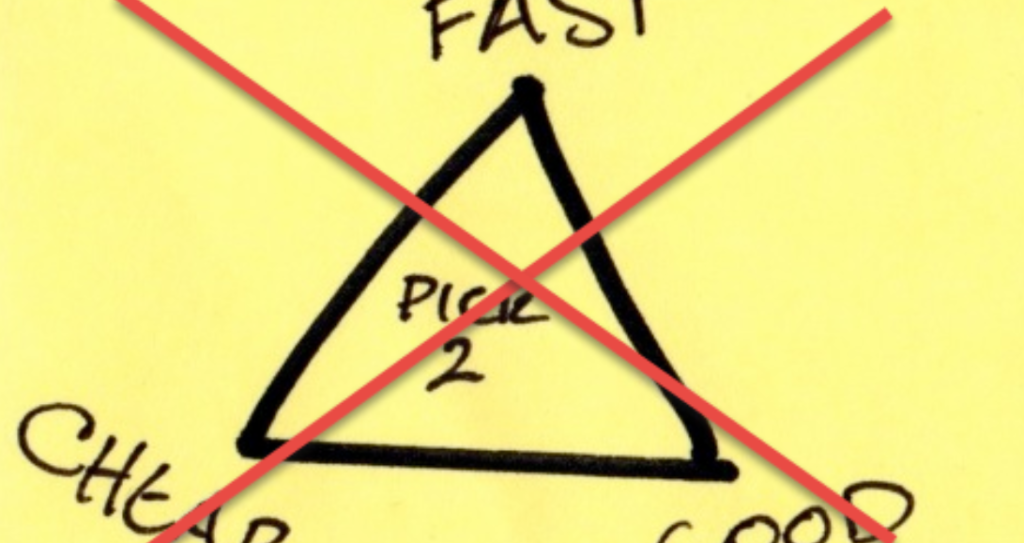
We have all heard about the Iron Triangle; Good-Fast-Cheap, pick two! True, very true, but that was back when a mobile phone meant the police car radio, gas was 65 cents a gallon, and owning a 19” color Sony Trinitron TV was very cool. The Iron Triangle is not, and can’t be true in 2019. Advances in software engineering methodologies, architecture, tools, and platforms, and a very skilled workforce negated the false necessity of the Iron Triangle ‘pick 2’. Another reason for the ‘rusting’ of the Iron Triangle is the business demand for a more efficient and effective software engineering output. It is no longer acceptable, or tolerated to hide behind the ‘pick 2’ mantra.
Project managers code of ethics

Project Managers Code of Ethics Work approach: As project managers, our work approach is grounded in our code of ethics: As practitioners of project management, we are committed to doing what is right and honorable. We set high standards for ourselves and we aspire to meet these standards in all aspects of our lives – at work, at home and in service to our profession. Responsibility Our duty to take ownership for the decisions we make or fail to make, the actions we take or fail to take, and the consequences that result. Respect: our duty to show a high regard for ourselves, others and the resources entrusted to us. Fairness: our duty to make decisions and act impartially and objectively. Free from self-interest, prejudice and favoritism. Honesty: our duty to understand the truth and act in a truthful manner both in our communications and conduct. Setting us up for success: Trust: We trust each other, rely on that same trusting relationship with our customers. Respect: WE respect our colleagues to maximize their contribution. This means respecting the integrity of our project structure – allowing us to do our best work.
Changing the airplane engine mid-flight: How to correct course amid project challenges!

We have all been asked, how do you change the airplane engine mid-flight? The answer is almost always: “With a great deal of difficulty”! Replacing current products, services, processes, or operations with new ones, while continuing to conduct business, and meet customer demands and obligations is no easy task. But it can, and must be done. The alternative is simply business failure! Here are the 10 (not so easy) steps I have taken in the past to replace the engine: 1- First, and before all else, Sharpen The Saw. You must thoroughly analyze the current state, and identify all deficiencies, inefficiencies, and conflicts. I can’t over emphasize enough the need for crisp understanding of the current state, and the exact need to change, including a clear understanding of strategic imperative, and operational needs. 2- Armed with your analysis from step 1, work on the architecture and design of the solution(s), and ensure alignment with the strategies, financial, and operational goals of all stakeholders. 3- Architecture and design may direct you to two possible directions (or a combination thereof). One possible direction could be a green field approach, where an entirely new ‘system’ is created, while the old system remains operational until a new one is ready. If this is the case, congratulations, you need not read any further! 4- However, like most organizations, step 3 is hardly feasible. If this is the case, you must begin a process of detailed design and analysis of a piece-wise replacement of processes, products, or operations ‘in-situ’. This step also includes the selection of technology platforms (if applicable), resources, financials, and change management strategy. 5- Ensure that solutions and designs are aligned with strategy(s), financial and operational goals… Not an easy task, but it must be done methodically and systemically, and not just by Power Point slides. There are mapping tools and techniques that can assist you with this step. 6- Create a clear road map and an implementation plan based on previous steps. It is important to note that small wins and proving that the proposed solution will work is an important part of maintaining credibility and trust. It is like building up a credibility ‘savings account’ for when the time comes when you will need to spend it (and the time WILL come). Be transparent and share both gain and pain with all stakeholders. 7- Create a self-correcting process for ensuring that plans stay on target. Many corrections will be needed, and project plans will deviate many times from original designs. 8- Once a quarter (I like to break the year into 4 quarters-worth for several reasons, fiscal is a primary one) ask these two questions: 1) Are we doing things right? This your continuous improvement exercise. 2) Are we doing the right things? This is your strategy and operational alignment mapping. 9- Knowing that initiatives of this nature never really ‘end’, you need to create lines in the sand … some road markers to indicate when done is done from the ‘customer’ perspective… You must let your customer define these markers upfront 10- Celebrate small and big wins. No, I am not talking about just calling in for pizza, cake or drinks. Celebrating means acknowledging and rewarding people who are the reasons for success, and correcting others who stand in the way. Enjoy the flight! https://projectheroes.io/black-diamond-casino-review
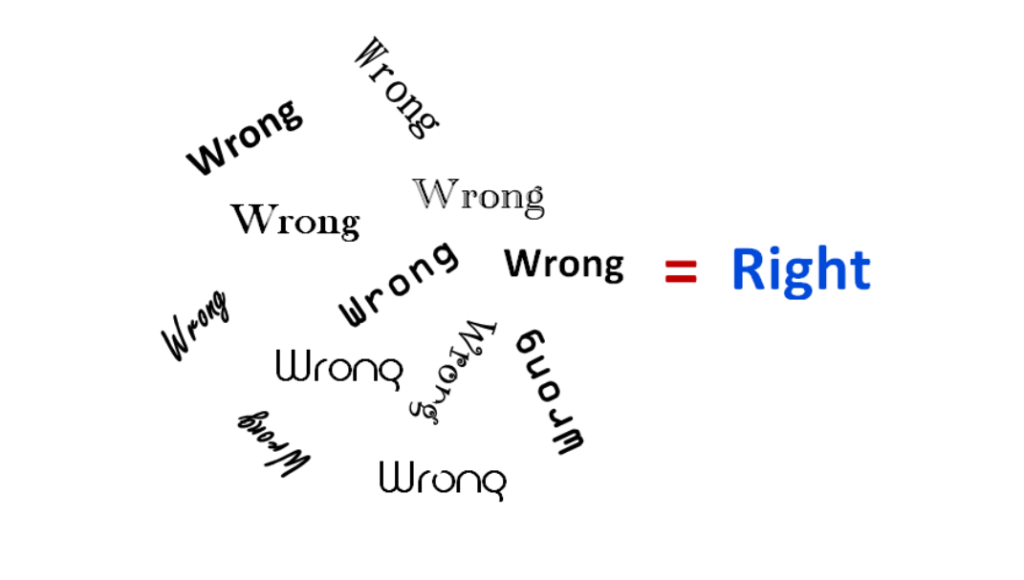
Two (3, 5, 8 or 100) wrongs do make it right! A Set Theory Approach to Data Self-Organization
https://projectheroes.io/black-diamond-casino-review https://projectheroes.io/black-diamond-casino-review